SKIN HEALTH
5 Signs Your Skin Barrier Is Damaged (And How to Repair It)
April 5, 2025
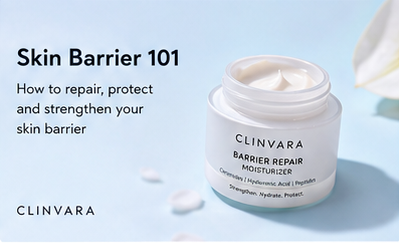
Persistent redness, stinging after cleansing, and skin that feels dry no matter how much you moisturise — these are signs of a damaged skin barrier, not random skin issues. Here is how to identify what is happening and what to do about it.
## What Is the Skin Barrier? The skin barrier — also called the stratum corneum — is the outermost layer of your skin. Think of it as a brick wall: skin cells (the bricks) held together by a carefully balanced mix of lipids — primarily ceramides, cholesterol, and free fatty acids (the mortar). This structure does two critical things: 1. **Keeps moisture in** — preventing transepidermal water loss (TEWL), which is what causes the tight, dry, or dehydrated feeling associated with a weakened barrier 2. **Keeps irritants out** — blocking bacteria, pollutants, allergens, and other environmental stressors from penetrating into deeper layers of skin When the barrier is healthy, skin feels comfortable, looks plump, and reacts calmly to products and environmental conditions. When it is damaged or compromised, that protective structure breaks down — and almost every aspect of your skin can suffer as a result. The skin barrier also maintains a slightly acidic pH (around 4.5–5.5), known as the acid mantle. This acidity is part of what keeps harmful microorganisms from thriving on the skin surface. Disrupting this pH — through harsh cleansers, certain actives, or over-washing — is one of the ways the barrier can become compromised.
## Why the Skin Barrier Matters A healthy skin barrier is the foundation of every other skincare goal. You cannot effectively brighten skin, reduce breakouts, or address signs of ageing if your barrier is compromised — because: - Products that should help may penetrate too aggressively or unevenly, causing irritation instead of benefit - Skin becomes more susceptible to bacteria and environmental microbes, which can worsen breakouts - Moisture evaporates faster than the skin can retain it, leading to persistent dryness even with regular moisturising - Inflammation increases, which is linked to post-inflammatory hyperpigmentation, sensitivity, and premature ageing - The skin surface becomes uneven and reactive, making makeup and SPF sit poorly Fixing and maintaining a healthy skin barrier is not a luxury step. It is the prerequisite for everything else to work.
## Sign 1: Products That Used to Feel Fine Now Sting or Burn One of the clearest and earliest warning signs of barrier damage is a sudden change in how your skin responds to products you have used without issue before. If your toner now stings slightly. If your serum makes your cheeks feel warm. If your cleanser leaves a tight, uncomfortable feeling that lingers — these are signals that something has shifted in your skin's protective capacity. A healthy, intact barrier filters what gets through. When it is compromised, even gentle, well-formulated products can feel harsh because they are reaching nerve endings and skin layers they would not typically contact in a healthy barrier state. This reactivity can appear gradually — worsening slowly over weeks of over-exfoliation or harsh cleansing — or suddenly, following one particularly disruptive product or combination of actives. **What to do immediately:** - Remove all actives — exfoliants, retinol, high-strength vitamin C, benzoyl peroxide — from your routine - Switch to the most gentle cleanser you own, or purchase one specifically formulated to preserve the skin barrier - Apply a fragrance-free, ceramide-based moisturiser and nothing else for several days - The CLINVARA Natural Moisturizing Factors + HA Cleanser is designed to cleanse effectively without disrupting the skin's lipid layer — an appropriate choice during this period
## Sign 2: Skin Feels Tight, Rough, or Flaky — Even After Moisturising When your skin barrier is functioning properly, a good moisturiser provides meaningful, lasting relief. If you are applying moisturiser regularly and your skin still feels tight and dry within an hour, something else is happening. A damaged barrier cannot hold water effectively. No matter how much hydration you apply to the surface, it escapes into the environment through a process called transepidermal water loss (TEWL). The more compromised the barrier, the faster water escapes — and no surface application of product can fully compensate for a structural deficiency in the barrier itself. Flakiness and rough texture are also common signs. These are not necessarily signals that you need more exfoliation — in fact, exfoliating a compromised barrier almost always makes things significantly worse. The flakiness is typically the result of rapid moisture loss from the outermost skin layers, not excess dead skin cell buildup. **What to do:** - Switch to an emollient-rich moisturiser that helps physically seal moisture into the skin - Ceramide-based formulas directly support barrier structure — the CLINVARA Ceramide Moisture is formulated with ceramides, which are a natural structural component of a healthy skin barrier - Apply moisturiser to slightly damp skin to lock in surface moisture before it evaporates - Consider applying a thin layer of an occlusive ingredient (squalane, petrolatum) over your moisturiser at night to further reduce water loss during recovery
## Sign 3: Redness or Warmth That Appears After Cleansing Some mild redness after cleansing is normal if you have used warm water, especially in cooler weather. But if your skin consistently appears red, blotchy, or feels noticeably warm after cleansing with a supposedly gentle formula, your barrier may be too compromised to handle even mild surfactants. This post-cleanse redness reflects a lowered tolerance threshold. A healthy barrier buffers the skin against the minor pH disruption of cleansing. A damaged barrier has far less buffering capacity, so even a well-formulated cleanser can trigger visible inflammation. This sign is frequently worsened by: - Foaming or sulphate-based cleansers (SLS, SLES) — common in pharmacy and drugstore options - Cleansing more than twice daily - Using water that is too hot - Rubbing or wiping aggressively rather than patting dry - Using exfoliating cleansers or cleansers with added actives **What to do:** - Switch immediately to a non-foaming, pH-balanced cleanser — the CLINVARA Natural Moisturizing Factors + HA Cleanser is formulated to minimise disruption to the skin's natural lipid film - Use cool to lukewarm water only - Pat dry gently with a clean, soft towel — do not rub - Cleanse no more than twice daily; some people with very sensitive or compromised skin benefit from a simple water rinse in the morning only
## Sign 4: Breakouts Alongside Dryness This combination frequently surprises and confuses people. Breakouts are typically associated with oily or congested skin — so why are they appearing while the skin simultaneously feels dry and irritated? A damaged barrier can create exactly this paradox through several mechanisms: 1. The skin detects barrier damage and increases oil production as a compensatory response — attempting to re-seal the surface 2. Meanwhile, water is escaping rapidly (TEWL), leaving skin simultaneously oily-looking on the surface but functionally dehydrated underneath 3. Barrier inflammation directly triggers breakout-like responses in some skin types 4. With the barrier compromised, bacteria and environmental debris can more easily enter the skin and contribute to congestion The instinctive response — reaching for acne-targeting products that dry out the skin — typically makes the cycle significantly worse. Stripping products remove even more of the barrier's lipid layer, worsening both the dryness and the inflammation that is driving the breakouts. **What to do:** - Prioritise barrier repair over acne treatment during this period - A non-comedogenic, ceramide-based moisturiser will not cause breakouts and will address the underlying issue - Once the barrier is restored and skin has calmed, acne-targeting actives can be reintroduced carefully - Niacinamide — such as the CLINVARA Niacinamide 10% Face Serum — is often the appropriate first active to reintroduce because it addresses both barrier support and can help reduce the appearance of post-breakout marks
## Sign 5: Makeup and Sunscreen Sit Unevenly on the Skin If SPF pills, foundation clings to dry patches, or your base separates within an hour of application, your skin texture and barrier health are likely contributing factors. A healthy, hydrated skin surface provides a smooth, consistent canvas. A compromised barrier creates uneven texture, inconsistent hydration across different areas of the face, and a skin surface that products cannot adhere to or blend into properly. This sign is easy to dismiss as a product compatibility issue — wrong foundation formula, wrong SPF — but if you are consistently experiencing patchy or unstable application regardless of the product, the skin barrier is worth investigating first. **What to do:** - Focus on hydration and barrier support in the weeks before troubleshooting your makeup or SPF - A ceramide-based moisturiser applied to well-prepped skin can significantly improve how subsequent products sit - If pilling is an issue, allow each layer to fully absorb before applying the next — the barrier needs time to rebuild its ability to accept and hold product layers - Reduce the total number of layers until your barrier is stronger — fewer products applied to healthy skin will always outperform many products on a compromised surface
## Common Causes of a Compromised Skin Barrier Understanding what damaged your barrier helps you avoid the same pattern during and after recovery. **Over-exfoliation:** Using AHAs, BHAs, or physical scrubs too frequently is one of the most common causes of barrier disruption. Exfoliants are effective — but they work by removing skin layers. Used too often or at too high a concentration, they do not allow the barrier adequate time to recover between sessions. Limit exfoliation to 2–3 times per week at most. **Harsh or sulphate-based cleansers:** Foaming cleansers with SLS or SLES strip the lipid layer of the skin with each wash. Daily use — especially multiple times per day — degrades barrier integrity progressively. **Retinol misuse:** Retinol is among the most studied and effective skincare actives, but starting at too high a concentration or using it nightly before the skin has adjusted is a reliable way to compromise the barrier. **Low-pH actives used excessively:** High-strength vitamin C, glycolic acid, and similar low-pH actives require acidic conditions to work. Used too frequently without adequate barrier recovery time, they can progressively weaken the acid mantle and barrier structure. **Weather and environment:** Cold air, low humidity, wind, and indoor heating all accelerate transepidermal water loss. Seasonal transitions — especially autumn to winter — are common triggers for barrier disruption. **Stress and sleep deprivation:** Chronic stress elevates cortisol, which impairs the skin's ability to produce and maintain its lipid layer. Poor and insufficient sleep has a compounding effect on the same mechanisms. **Introducing too many actives simultaneously:** Adding multiple strong actives at the same time does not accelerate results — it accelerates barrier compromise. The skin needs time to adjust to each new active. **Hard water:** High mineral content in tap water can disrupt the acid mantle over time with regular use, particularly in areas with very hard water. A gentle cleanser that does not require vigorous rinsing can help mitigate this.
## How to Repair a Damaged Skin Barrier Repairing a compromised skin barrier comes down to one core principle: **reduce what is damaging it, and supply what it needs to rebuild**. **Step 1: Simplify your routine immediately** Pause all actives — exfoliants, retinol, high-strength vitamin C, benzoyl peroxide. These are valuable ingredients, but a damaged barrier cannot tolerate them and needs time to recover without additional chemical stress. This is not permanent — it is a temporary reset. **Step 2: Switch to a barrier-safe cleanser** Your cleanser is in contact with your skin every day, often twice. Switching to a gentle, non-stripping formula like the CLINVARA Natural Moisturizing Factors + HA Cleanser removes a major daily source of potential disruption. Look for a formula that is pH-balanced, sulphate-free, and fragrance-free. **Step 3: Apply a ceramide-rich moisturiser consistently** Ceramides are lipids that form part of the skin barrier's natural structure. Topical ceramides can help replenish what has been depleted and support the barrier's physical rebuild. The CLINVARA Ceramide Moisture is formulated for this — apply morning and evening during recovery, generously and consistently. **Step 4: Add humectants before your moisturiser** Humectants like hyaluronic acid and glycerin attract water molecules to the skin. Applied under a ceramide moisturiser, they help restore surface hydration to skin that is losing moisture rapidly. Apply to slightly damp skin for best results. **Step 5: Protect with SPF every day without exception** UV exposure worsens barrier damage and slows repair. Daily SPF during recovery is not optional — it is an essential part of the process. Choose a gentle mineral or hybrid formula if your skin is particularly reactive. **Step 6: Reintroduce actives carefully and one at a time** Once your skin is comfortable — no stinging, no post-cleanse redness, no tight or flaky feeling — begin reintroducing actives slowly. Start with the gentlest ones. Niacinamide is typically one of the first appropriate reintroductions because it actively supports ceramide production while being well tolerated by most skin. Wait at least two weeks between each new reintroduction.
## Recovery Timeline How quickly the skin barrier repairs depends on severity of damage, consistency of the recovery routine, and individual factors including age, genetics, and overall health. | Timeframe | What to Expect | |-----------|----------------| | Days 1–3 | Stinging and sensitivity should begin to ease once irritating products are removed | | Week 1–2 | Redness reduces; skin becomes more comfortable after cleansing; tightness begins to ease | | Week 2–4 | Texture improves noticeably; flakiness reduces; skin begins to look and feel less reactive | | Week 4–8 | Significant improvement for most mild-to-moderate cases; basic routine should feel comfortable | | Week 8–12 | More severe barrier damage may need the full 8–12 weeks before stronger actives can be reintroduced | **When to consult a professional:** If your skin is not meaningfully improving after 4–6 weeks of a simplified barrier-focused routine — or if you are experiencing significant pain, weeping, crusting, or severe widespread inflammation — it is worth speaking with a dermatologist. Conditions that mimic barrier damage, such as eczema (atopic dermatitis) or rosacea, may require specific medical assessment and management.
## Recommended Recovery Routine | Time | Step | Product Notes | |------|------|---------------| | Morning | Gentle cleanser | Non-foaming, pH-balanced; CLINVARA Natural Moisturizing Factors + HA Cleanser | | Morning | Hydrating toner (optional) | Fragrance-free; no exfoliants or alcohol | | Morning | Lightweight ceramide moisturiser | Apply to slightly damp skin; CLINVARA Ceramide Moisture | | Morning | SPF 30–50 | Non-negotiable; mineral formula if very reactive | | Evening | Gentle cleanser | Same as morning or a mild cleansing balm | | Evening | Ceramide moisturiser | Apply generously; CLINVARA Ceramide Moisture | | Evening | Occlusive (optional, if very dry) | Petrolatum, squalane, or shea butter as a final seal | **During recovery, avoid:** - Exfoliating acids (AHAs, BHAs, PHAs) - Retinol and retinoids - High-concentration vitamin C (L-ascorbic acid) - Fragrance-heavy products - Physical scrubs or exfoliating cleansers - Hot water on the face - Layering multiple new products simultaneously
## Ingredients That Support Barrier Recovery **Ceramides:** The most structurally relevant ingredient for barrier repair. Ceramides are natural components of the skin's lipid layer. Topically applied ceramides, particularly in combination with cholesterol and fatty acids, have meaningful evidence for supporting barrier restoration and reducing TEWL. **Niacinamide (vitamin B3):** Supports ceramide synthesis within the skin and has well-studied anti-inflammatory properties that help calm reactive and damaged skin. Generally well tolerated even on compromised skin. The CLINVARA Niacinamide 10% Face Serum is often one of the first actives that can be reintroduced during recovery due to its gentle and barrier-supportive profile. **Hyaluronic acid:** A humectant capable of drawing in and holding significant amounts of water, helping to restore surface hydration to skin experiencing high TEWL. Works best when applied to damp skin and immediately sealed with a moisturiser. **Panthenol (provitamin B5):** A multi-functional ingredient commonly used in barrier-repair formulas for its soothing, moisturising, and healing-supportive properties. Converts to pantothenic acid in the skin, supporting cellular processes involved in recovery. **Glycerin:** An effective humectant and a staple in gentle, hydrating formulations. Supports hydration without disrupting the barrier or causing irritation — appropriate even on very reactive skin. **Squalane:** A lightweight, skin-identical oil that helps reinforce the lipid layer without clogging pores. Suitable for most skin types as an occlusive layer over a ceramide moisturiser. **Allantoin:** A calming ingredient used in sensitive and recovery-focused formulations for its ability to help soothe irritated, reactive, or inflamed skin. **Centella asiatica (cica):** An increasingly common ingredient in barrier-repair formulations, associated with soothing and calming properties, and used in products designed for reactive or post-procedure skin.
## How to Prevent Skin Barrier Damage in the Future Once your barrier has recovered, the goal is to maintain its integrity rather than repeat the cycle. **Limit exfoliation frequency:** Two to three times per week is sufficient for most skin types. More frequent exfoliation does not accelerate results — it prevents the barrier from completing its recovery between sessions. **Use a gentle, pH-balanced cleanser daily:** The cleanser you use twice every day has an outsized impact on your barrier health. A product like the CLINVARA Natural Moisturizing Factors + HA Cleanser is designed to clean the skin without stripping — making it a sound long-term choice. **Introduce one new active at a time:** Wait at least a week between introducing new products. This allows your skin to adjust and makes it easy to identify any product that is causing an issue. **Moisturise consistently:** Daily ceramide moisturising supports barrier function even when your barrier is healthy. The CLINVARA Ceramide Moisture provides structural lipids that support the barrier on an ongoing basis. **Wear SPF every day:** UV damage is cumulative and is one of the chronic drivers of barrier degradation over time. SPF is both a recovery tool and a long-term maintenance necessity. **Monitor seasonal transitions:** The switch from humid summer to cold, dry winter is a common trigger for barrier issues. Increase moisturiser richness and reduce active frequency during low-humidity months.
## FAQ **Q: How do I know if my skin barrier is damaged or if my skin is just dry?** Dry skin lacks sufficient oil and tends to feel tight. A damaged barrier shows additional signs: stinging or burning from products that previously felt fine, unusual or persistent redness, and a flakiness or tightness that does not improve meaningfully even with regular moisturising. Multiple signs together suggest barrier damage rather than simple dryness. **Q: How long does it take to repair a damaged skin barrier?** Mild disruption can begin resolving within a week of removing irritating products. More significant damage typically requires 4–8 weeks of consistent, gentle care. Severe cases may take up to 12 weeks. Reintroducing actives too early will reset progress. **Q: Should I stop using all skincare when my barrier is damaged?** No — but you should reduce your routine significantly. A barrier-safe cleanser, a ceramide moisturiser, and SPF in the morning are the non-negotiable steps. Everything else — exfoliants, retinol, vitamin C, benzoyl peroxide — should be paused until your skin is comfortable again. **Q: Is niacinamide safe to use on a damaged skin barrier?** Generally yes. Niacinamide is one of the few actives typically well tolerated even on compromised skin, and it actively supports ceramide production which aids barrier recovery. If skin is extremely reactive, patch test first — but it is usually far better tolerated than retinol or exfoliants during a compromised period. **Q: Can over-exfoliation cause a damaged skin barrier?** Yes — it is one of the most common causes. Exfoliants work by removing skin layers. Used too frequently or at too high a concentration without adequate recovery time, they progressively strip the barrier's structural lipids and disrupt its pH. **Q: What is the best moisturiser for a damaged skin barrier?** Look for a formula containing ceramides, cholesterol, and fatty acids — this combination most closely mirrors the natural lipid profile of a healthy skin barrier. The CLINVARA Ceramide Moisture is formulated with this in mind and is suitable for use throughout barrier recovery. **Q: Can I use retinol if my skin barrier is damaged?** It is strongly recommended to pause retinol during barrier recovery. Retinol is effective but increases skin cell turnover and can be significantly more irritating on a compromised barrier. Reintroduce it slowly — at a low concentration, every third night — only once the barrier has fully recovered. **Q: Can stress actually damage the skin barrier?** Yes. Chronic stress elevates cortisol, which impairs the skin's ability to maintain its lipid layer and slows repair processes. Poor sleep has a compounding effect on the same mechanisms. Skin barrier function is genuinely connected to overall physical and mental health. **Q: What foods or supplements support skin barrier health?** Research in this area is ongoing. Omega-3 fatty acids — found in oily fish, flaxseed, and walnuts — are commonly associated with supporting skin barrier function. Adequate hydration, vitamin D, and zinc also play roles in overall skin health. However, topical barrier repair remains the most direct and evidence-supported approach. **Q: Can hard water damage my skin barrier?** Possibly, with prolonged daily exposure. High mineral content in tap water can deposit on the skin surface and disrupt the acid mantle over time. Using a gentle, minimal-rinse cleanser and following with a moisturiser promptly after washing can help mitigate this. **Q: How do I know when my skin barrier has fully recovered?** You can gauge recovery by comfort. When products that previously stung are tolerated without discomfort, when skin feels hydrated for several hours after moisturising, and when post-cleanse redness has resolved, your barrier is likely in a significantly better state. Do not rush actives — it is better to wait an extra week than to disrupt recovery. **Q: Is a damaged skin barrier the same as sensitive skin?** Not exactly. Sensitive skin is a skin type — an inherent, often genetic tendency to react. A damaged skin barrier is a state — something that has happened to the skin due to external factors and can be repaired. That said, people with naturally sensitive skin are more prone to barrier disruption and may experience the signs more intensely. **Q: Can acne products damage the skin barrier?** Yes — particularly benzoyl peroxide at high concentrations, salicylic acid used too frequently, and alcohol-based toners or spot treatments. These are effective acne-targeting ingredients but can strip the barrier with overuse. Balance acne treatment with consistent barrier support. **Q: Can I wear makeup over a damaged skin barrier?** You can, but minimise the number of products and choose gentle, fragrance-free formulas. Heavy makeup worn on a compromised barrier can worsen irritation and slow recovery. Keep makeup minimal, remove it gently and thoroughly, and prioritise your recovery routine underneath. **Q: Do I need to see a dermatologist for a damaged skin barrier?** For most people, a simplified home routine will restore barrier health within 4–8 weeks. If your skin is not improving after 6 weeks of a gentle barrier-focused routine, or if you are experiencing severe symptoms like weeping skin, significant pain, or widespread inflammation, consulting a dermatologist is advisable. Some underlying conditions — eczema, psoriasis, rosacea — can mimic barrier damage and require specific management. **Q: Does drinking more water help repair a damaged skin barrier?** Adequate hydration supports overall health, including skin health. However, drinking more water does not directly repair a structurally compromised skin barrier in the way that topical ceramides and lipids do. Both internal and external hydration matter, but for barrier repair specifically, topical treatment is the primary intervention.
Shop Related Products
Formulas connected to this article's core skin concern and routine guidance.
Back to all journal articles