SKINCARE GUIDE
The Right Order to Layer Your Skincare Products (Complete Guide)
May 10, 2025
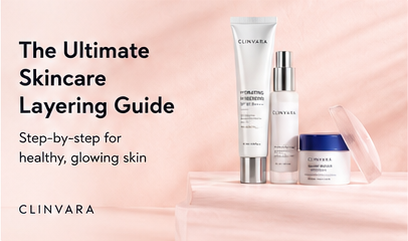
Applying skincare in the wrong order can reduce how well your products absorb and work. This complete guide covers the exact layering sequence — morning and evening — so every product you use has the best chance to perform.
## Why Skincare Layering Order Matters Skincare products are formulated to work in a specific environment — on skin that has been properly prepped, at a certain pH, and without a barrier already sitting on top of them. When you apply products in the wrong order, you can: - Block lighter, active ingredients from reaching your skin - Dilute or destabilise certain formulas before they can do anything - Create a physical barrier with a thick cream that stops a serum from absorbing - Waste money on products that are working at a fraction of their potential - Cause unnecessary irritation by stacking incompatible textures or pH levels The good news: the core rule of skincare layering order is simple. Once you understand it, the rest falls into place naturally — and your entire routine becomes more effective without adding a single new product.
## The Thin-to-Thick Rule Explained The foundational principle behind every effective skincare routine is texture. You apply products from the **thinnest, most water-like consistency** to the **thickest, most occlusive**. Here is why this works: - Thin, watery products (like toners and essences) absorb quickly and do not leave a film that would block what comes next - Mid-weight serums can penetrate a skin surface prepped by lighter layers - Creams and oils are designed to sit closer to the surface and help seal in everything underneath If you apply a thick moisturiser before a serum, the serum has to work through a layer of emollients and occlusives to reach your skin — and most of it simply will not. Think of your skin like a sponge. A damp sponge absorbs liquid far more effectively than a dry, sealed one. Lighter products prep the surface so the next layer can penetrate. **The exception to thin-to-thick:** Eye creams. Even though many eye creams are lighter than a face moisturiser, they are typically applied before face moisturiser to ensure the targeted formula reaches the delicate under-eye area without being diluted.
## pH and Why It Affects Layering Order Texture is the primary layering rule, but pH matters too — especially when you are using active ingredients. Some actives work best at a specific skin surface pH: - **Vitamin C (L-ascorbic acid):** Most effective at pH 2.5–3.5. Applying it to a freshly cleansed face gives it the best environment to work before subsequent layers raise the pH. - **AHAs and BHAs (exfoliating acids):** Also work at a lower pH range (3.0–4.0). Apply before moisturisers or serums that would buffer their acidity. - **Niacinamide:** Stable across a wide pH range, making it one of the most layering-friendly actives available. - **Retinol:** Less pH-sensitive but can be destabilised or irritating when combined with low-pH actives on the same application. **Practical implication:** Apply pH-sensitive actives like vitamin C and AHAs first in your routine — directly onto cleansed skin — and wait 1–2 minutes before layering anything else. This brief pause allows the active to interact with the skin at the right pH before the environment shifts.
## Step-by-Step Skincare Layering Order | Step | Product Type | Why This Order | |------|-------------|----------------| | 1 | Cleanser | Removes oil, SPF, makeup and debris so skin is clear for actives | | 2 | Toner or Essence | Balances pH and adds initial hydration; thin texture absorbs instantly | | 3 | Treatment Serum (actives) | Concentrated ingredients need direct contact with clean skin | | 4 | Eye Cream | Apply before heavier layers to ensure absorption | | 5 | Moisturiser | Locks in serums and adds barrier-supporting ingredients | | 6 | Facial Oil (optional, PM only) | Heavier than water-based moisturisers; seals everything beneath | | 7 | SPF (AM only) | Always last in the morning to maintain UV filter integrity | This sequence applies to both morning and evening routines, with differences covered in detail below.
## Morning Skincare Routine — Step by Step Your morning routine should focus on **protection and preparation**. You are getting your skin ready to face UV exposure, pollution, and environmental stress throughout the day. | Step | Product | Key Purpose | |------|---------|-------------| | 1 | Gentle cleanser | Remove overnight sweat, oil and any residue | | 2 | Hydrating toner or essence | Prep skin and boost hydration baseline | | 3 | Vitamin C serum | Antioxidant protection; brightening | | 4 | Niacinamide serum | Sebum control, barrier support, even tone | | 5 | Moisturiser | Hydration and occlusion | | 6 | Broad-spectrum SPF 30–50 | Non-negotiable UV protection | **Morning tips:** - Apply vitamin C to clean skin before layering anything else — it works best at a lower pH and on a fresh surface - If you use both a vitamin C serum and a niacinamide serum, apply vitamin C first and wait 1–2 minutes before applying niacinamide - SPF always goes last, after moisturiser — never under it - Do not layer a facial oil in the morning if you are acne-prone or using SPF, as it can interfere with sunscreen performance - The CLINVARA Natural Moisturizing Factors + HA Cleanser is well suited to morning cleansing — it removes overnight buildup without stripping the skin's natural oils, so actives can absorb cleanly
## Evening Skincare Routine — Step by Step Your evening routine focuses on **repair, renewal and restoration**. Skin cell turnover naturally peaks at night, making this the ideal window for actives like retinol, exfoliating acids, and richer barrier treatments. | Step | Product | Key Purpose | |------|---------|-------------| | 1 | Oil or balm cleanser | Removes SPF, makeup and excess sebum | | 2 | Gentle second cleanser | Clears remaining residue for a truly clean surface | | 3 | Exfoliant (2–3x per week) | AHAs or BHAs to resurface; skip on retinol nights | | 4 | Treatment serum | Retinol, niacinamide, peptides, or pigmentation treatments | | 5 | Moisturiser | Heavier than morning formula is fine at night | | 6 | Facial oil or occlusive (optional) | Seal in moisture; supports barrier repair overnight | **Evening tips:** - Double cleansing at night is highly recommended if you wear SPF — which you should every day - Do not use vitamin C and retinol on the same night — they can cause irritation; use vitamin C in the morning and retinol in the evening - Ceramide-rich moisturisers at night can significantly support barrier repair — the CLINVARA Ceramide Moisture formula is designed for this purpose - Use your richest, most nourishing products at night when your skin is in active repair mode - If you use a pigmentation treatment such as the CLINVARA Deep Pigmentation Cream, the evening is the ideal time — apply it after your serum and before your moisturiser
## Beginner Morning Routine If you are new to skincare, start with the minimum effective routine. Consistency with three steps will always outperform an eight-step routine used inconsistently. | Step | Product | Notes | |------|---------|-------| | 1 | Gentle cleanser | Non-stripping; the CLINVARA Natural Moisturizing Factors + HA Cleanser is a good starting point | | 2 | Lightweight moisturiser | Look for hyaluronic acid or glycerin in the formula | | 3 | SPF 30–50 | This single step provides more long-term skin protection than any other | After 2–4 weeks of comfort with this routine, add one serum. A niacinamide serum like the CLINVARA Niacinamide 10% Face Serum is a logical first active — it is well tolerated by most skin types and delivers visible improvements to tone and texture over time.
## Beginner Evening Routine | Step | Product | Notes | |------|---------|-------| | 1 | Gentle cleanser | Same formula as morning is fine | | 2 | Niacinamide serum | 3–4 nights per week to start; build to daily | | 3 | Moisturiser | Choose a ceramide-containing formula for barrier support | Once this feels comfortable — typically 3–4 weeks — introduce one additional evening active. Most people add a retinol or an exfoliating acid at this stage, used 2–3 nights per week rather than daily.
## Advanced Routine Example — Full Morning For those with an established skincare routine targeting multiple concerns: | Step | Product | Notes | |------|---------|-------| | 1 | Gentle pH-balanced cleanser | CLINVARA Natural Moisturizing Factors + HA Cleanser | | 2 | Hydrating essence or toner | Layered while skin is still slightly damp | | 3 | Vitamin C serum | L-ascorbic acid or stable derivative; wait 2 minutes | | 4 | Niacinamide serum | CLINVARA Niacinamide 10% Face Serum; applied after vitamin C | | 5 | Eye cream | Pat gently; do not rub | | 6 | Ceramide moisturiser | CLINVARA Ceramide Moisture | | 7 | SPF 30–50 | Last step; do not layer anything over it | **Note:** This is a full routine for experienced users. If you are not yet comfortable with each of these steps individually, do not rush to build to this level.
## Advanced Routine Example — Full Evening | Step | Product | Notes | |------|---------|-------| | 1 | Cleansing oil or balm | Dissolves SPF and makeup thoroughly | | 2 | Gentle second cleanser | Removes residue; CLINVARA Natural Moisturizing Factors + HA Cleanser | | 3 | Exfoliant (2–3x per week) | AHA or BHA; skip on retinol nights | | 4 | Niacinamide serum | On non-retinol nights; CLINVARA Niacinamide 10% Face Serum | | 5 | Retinol (on retinol nights) | Begin at lowest available concentration; 2–3 nights per week | | 6 | Pigmentation treatment | CLINVARA Deep Pigmentation Cream after serum, before moisturiser | | 7 | Ceramide moisturiser | CLINVARA Ceramide Moisture; generous application | | 8 | Squalane or facial oil (optional) | Final seal for very dry skin types | **Scheduling note:** Many people find it useful to designate certain nights for specific actives. For example: retinol on Monday, Wednesday, Friday — exfoliant on Tuesday, Thursday — niacinamide on the remaining nights.
## Where Niacinamide Fits In Your Routine Niacinamide is one of the most versatile skincare ingredients and one of the easiest to layer. It is water-soluble, stable across a wide pH range, and compatible with almost everything. **In a morning routine:** Apply after toner and before heavier serums or moisturiser. The CLINVARA Niacinamide 10% Face Serum has a lightweight texture that absorbs in seconds and layers cleanly under SPF without pilling. **In an evening routine:** Apply after cleansing and before moisturiser. It pairs well with ceramide moisturisers and can be used on alternate nights to retinol if your skin is sensitive. **With exfoliating acids:** Apply the exfoliant first, wait a few minutes, then apply niacinamide. Do not apply niacinamide before a low-pH exfoliant — the niacinamide can buffer the acid and reduce its effectiveness. **With vitamin C:** Apply vitamin C first, wait 1–2 minutes, then niacinamide. Both can be used in the same routine without meaningful adverse reactions for most people.
## Where Pigmentation Treatments Fit In Your Routine Ingredients targeting hyperpigmentation — tranexamic acid, alpha-arbutin, kojic acid, vitamin C — work best applied to clean skin, early in the routine. **Morning placement:** After toner, before moisturiser and SPF. Vitamin C in particular benefits from early application because it begins neutralising oxidative damage from UV exposure as soon as you step outdoors. **Evening placement:** Apply a targeted treatment like the CLINVARA Deep Pigmentation Cream after your serum step and before your moisturiser, or as directed. At night, pigmentation-targeting ingredients work alongside the skin's natural repair cycle for a compounding effect. **Critical reminder:** SPF is the single most important step for preventing pigmentation from worsening. No topical treatment works fully without consistent sun protection.
## What Happens If You Layer in the Wrong Order Understanding the consequences of incorrect layering can motivate the habit of doing it correctly. **Serum after moisturiser:** The serum cannot penetrate through the occlusive layer. Active ingredients like niacinamide or vitamin C sit on top of the moisturiser film rather than reaching the skin. The product is wasted. **SPF before moisturiser:** The moisturiser physically disrupts and dilutes the UV filter network. SPF ratings are measured on bare skin — layering over SPF reduces its protective value significantly. **Oil before water-based serum:** Oil and water do not mix. A water-based serum applied over a facial oil cannot pass through the oil barrier to reach the skin. **High-strength exfoliant immediately followed by retinol:** Both are potent actives. Using them in sequence on the same night without skin acclimated to both is one of the most common causes of sudden barrier damage and severe sensitivity. **Vitamin C after niacinamide in the same routine:** Niacinamide is applied at a higher pH than vitamin C requires. If niacinamide goes first and raises the skin surface pH, the vitamin C that follows is less able to perform at optimal conditions.
## Skincare Layering for Different Skin Types **Oily skin:** Prioritise lightweight, water-based textures throughout. Use a gel moisturiser rather than a cream. Skip facial oils entirely in the AM. A niacinamide serum applied before a lightweight SPF is an effective, minimal morning stack. **Dry skin:** Do not skip steps — each layer builds on the one before it. Apply toner or essence while skin is still slightly damp from cleansing. Use a ceramide-rich moisturiser and consider a facial oil as the final step in the evening. **Combination skin:** Treat the T-zone and cheeks slightly differently if needed. Use lightweight layers overall, but apply a richer moisturiser to dry patches. The CLINVARA Ceramide Moisture works well as an all-over moisturiser that does not feel heavy on oilier areas. **Sensitive skin:** Keep layers to a minimum. The fewer products, the fewer potential reactants. Build slowly, patch test everything, and resist the temptation to add multiple new products at once.
## Common Skincare Layering Mistakes Even experienced skincare users make these errors. Avoiding them can make a meaningful difference to how your routine performs. **Mistake 1: Applying SPF before moisturiser** SPF always goes last in your morning routine. Applying anything over SPF dilutes the UV filters. **Mistake 2: Layering too many actives at once** More actives does not mean faster results. It often means more irritation and no way to identify what is or is not working. **Mistake 3: Not waiting between pH-sensitive actives** For vitamin C and exfoliating acids, a 1–2 minute wait before the next layer helps them work at the right pH before the skin surface environment shifts. **Mistake 4: Using facial oil before a water-based serum** Oil creates a barrier. Water-based serums cannot pass through. Always apply water-based products before any oil. **Mistake 5: Skipping moisturiser when using actives** Actives like retinol and exfoliants increase the importance of moisturising. Always follow with a good moisturiser — the CLINVARA Ceramide Moisture is well suited to this. **Mistake 6: Introducing multiple new products in the same week** If your skin reacts, you will not know which product caused it. Introduce one new product at a time, with at least one week between additions. **Mistake 7: Mixing serums in the palm before applying** Applying them separately allows each formula to absorb and perform as intended. Mixing can alter textures and in some cases create compatibility issues. **Mistake 8: Using hot water to rinse** Hot water strips the skin's natural lipid layer. Use lukewarm water for cleansing — especially important if your barrier is already compromised.
## FAQ **Q: What is the correct order to apply skincare products?** The general order is: cleanser → toner or essence → treatment serum → eye cream → moisturiser → SPF (morning only). Follow the thin-to-thick rule — apply lightest textures first and finish with the heaviest. **Q: Does layering order really make a difference?** Yes. Products are formulated to work in a specific skin environment. Applying a thick cream before a serum physically blocks the serum from absorbing properly. Layering in the right order ensures each product can reach the skin and perform as intended. **Q: Do I need to wait between each skincare step?** Not always. For most products, apply the next layer as the previous one is absorbed. For low-pH actives like vitamin C and exfoliating acids, a 1–2 minute wait before the next layer can improve their performance. **Q: Should SPF go before or after moisturiser?** After. SPF is always the last step in your morning routine. Applying anything over SPF dilutes the UV filter network and reduces protection. **Q: Can I use a moisturiser with SPF instead of a separate sunscreen?** Combined moisturiser-SPF products are convenient but rarely applied in a thick enough layer to achieve the stated SPF. For reliable protection, a dedicated sunscreen applied as the final step is recommended. **Q: Where does retinol go in a routine?** Retinol is used in the evening, after cleansing and any water-based serums, and before moisturiser. Do not use retinol on the same night as exfoliating acids unless your skin is fully acclimated to both. **Q: When should I apply niacinamide in my routine?** After toner and before moisturiser. In a routine that also includes vitamin C, apply vitamin C first, wait a minute or two, then apply niacinamide. The CLINVARA Niacinamide 10% Face Serum has a lightweight texture that sits comfortably between toner and moisturiser steps. **Q: Can I use a facial oil in the morning?** Generally not recommended for oily or acne-prone skin. For dry skin types, a very small amount of a lightweight oil under SPF can work — but test carefully. Many oils can interfere with SPF performance or contribute to congestion. **Q: Is toner necessary in a skincare routine?** Not essential for everyone. A good hydrating toner adds a base layer of moisture and can help even out absorption of subsequent products. If your routine is already working well without one, you do not need to add it. **Q: What order should I use if I only have two or three products?** Cleanser first, then moisturiser, then SPF (morning). Evening: cleanser, then moisturiser. Add products one at a time as your skin adjusts and you identify what it needs. **Q: How do I layer skincare for combination skin?** Use lightweight layers overall. Apply a slightly richer moisturiser to dry areas after your regular moisturiser if needed, rather than choosing between two different whole-face products. The same layering order applies regardless of skin type. **Q: Can I apply eye cream after moisturiser?** It is better applied before. Eye creams are typically targeted formulas that absorb best when applied directly to the skin before heavier face moisturisers are layered over the surrounding area.
Shop Related Products
Formulas connected to this article's core skin concern and routine guidance.
Back to all journal articles